I had read the Yingzao Fashi for a long time before standing in front of Chuzu Hall for the first time.
That mattered.
This was not my first encounter with a historic Chinese building. But it was the first time a large timber building I had studied as a system suddenly appeared in full scale, with its order still legible in the body of the structure. The impact was different from the first time I saw Canglang Pavilion. There, what struck me was cultivated atmosphere and lived spatial experience. Here, the response was sharper: excitement, admiration, and an almost immediate surge of analytical hunger.
I wanted to understand everything at once: how the members meet, how the proportions settle, how the corner holds, how the structure carries itself, and how a written order becomes materially convincing.
Chuzu Hall, the main hall of Chuzu Hermitage behind Shaolin Monastery, is often discussed as one of the most important surviving Song-period timber buildings for anyone trying to think seriously about how the Yingzao Fashi meets reality. This visual study is not an attempt to exhaust that question. It is a first field record: a structured set of observations on what the building makes visible, and why that visibility matters.
0. First Encounter
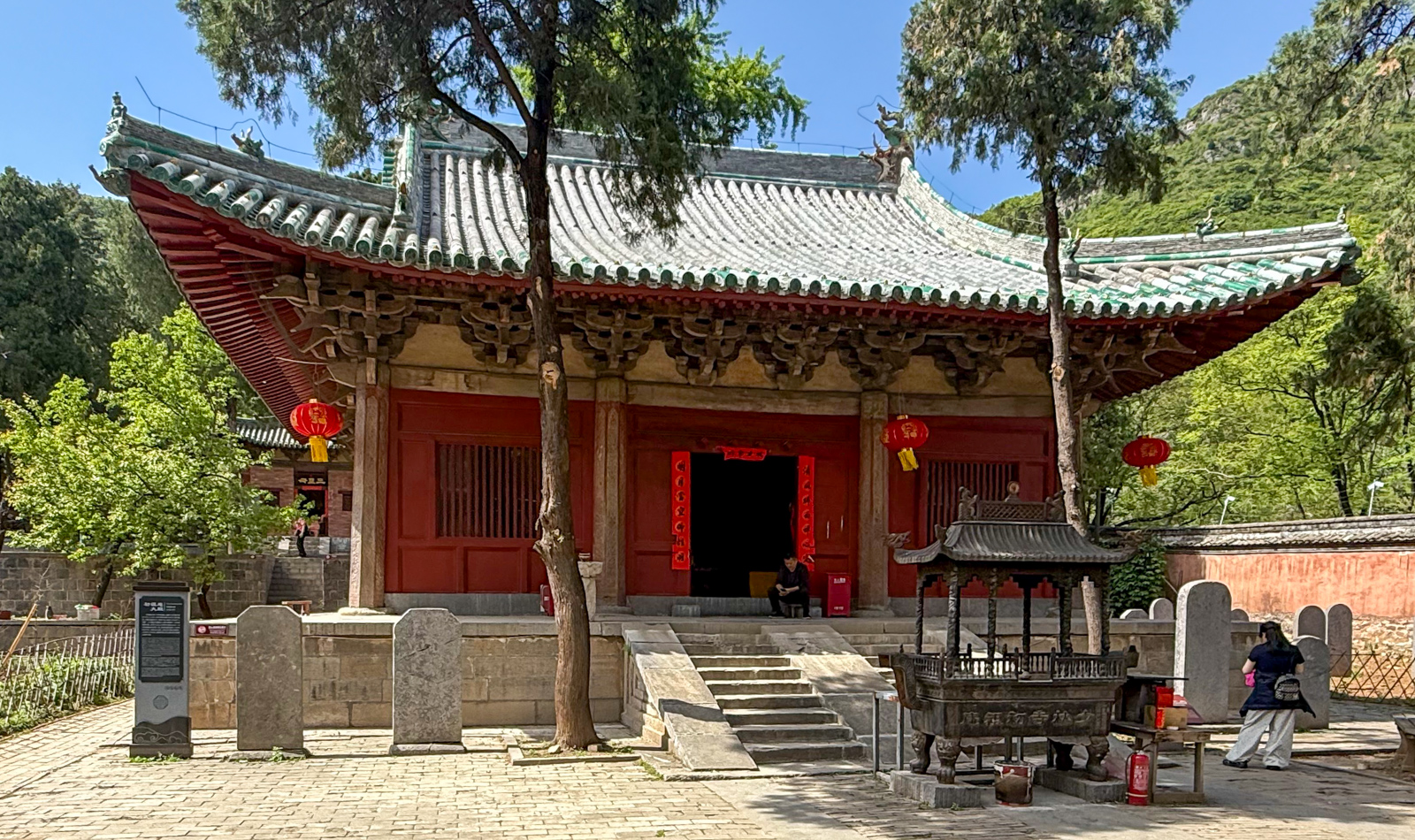
The first view matters because it establishes the terms of reading. Chuzu Hall is not overwhelming by scale alone. What makes it powerful is that its order is visible early. Even before close inspection, the building presents itself as something disciplined, adjusted, and internally coherent.
1. The Whole Stands First
Before details, the building already announces several structural intentions. In the oblique view, the corner columns show a clear inward inclination. The eaves project with force, but not with looseness. What first appears as visual poise quickly reveals itself as controlled adjustment.
The rear elevation provides another crucial clue. By compressing the three horizontal members within a single frame, the photograph makes the rise more readable: lower in the middle, higher toward both ends. This is not a perspectival correction in the Greek sense. It is a constructive and visual adjustment within a timber system—one that reinforces emphasis, bearing, and the felt stability of the whole.
2. Corners as Compression
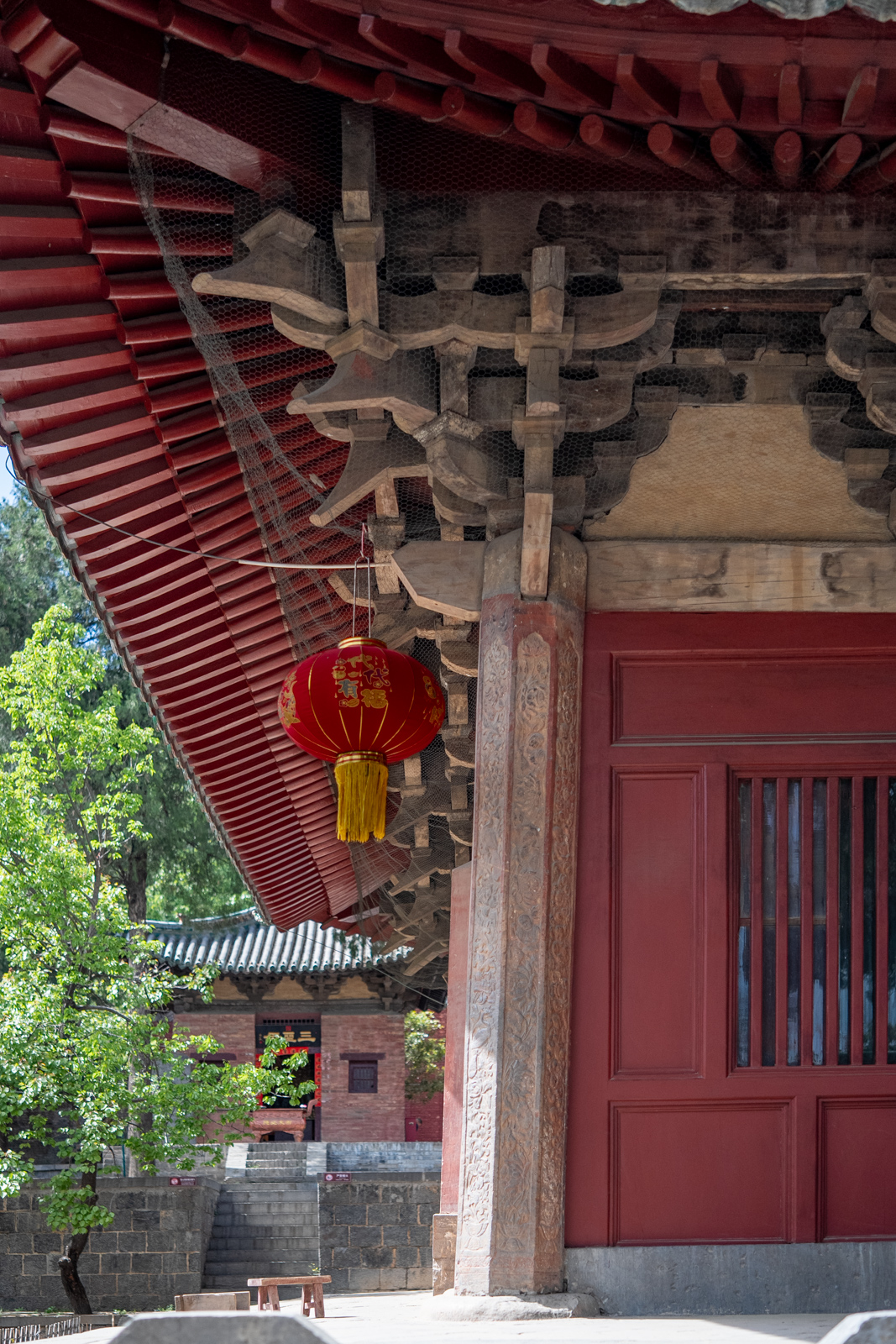
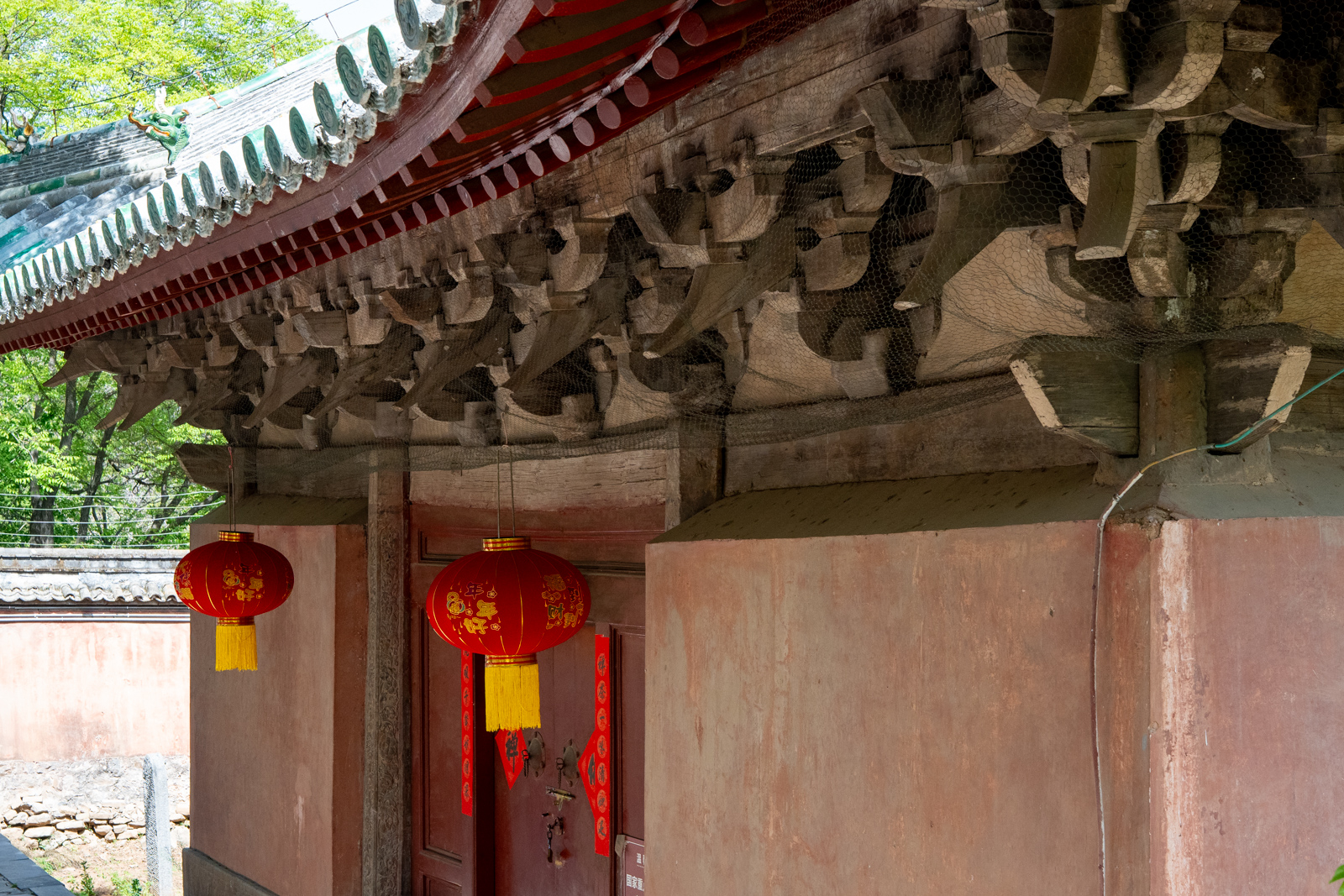
If the front establishes order, the corner reveals how order survives under pressure.
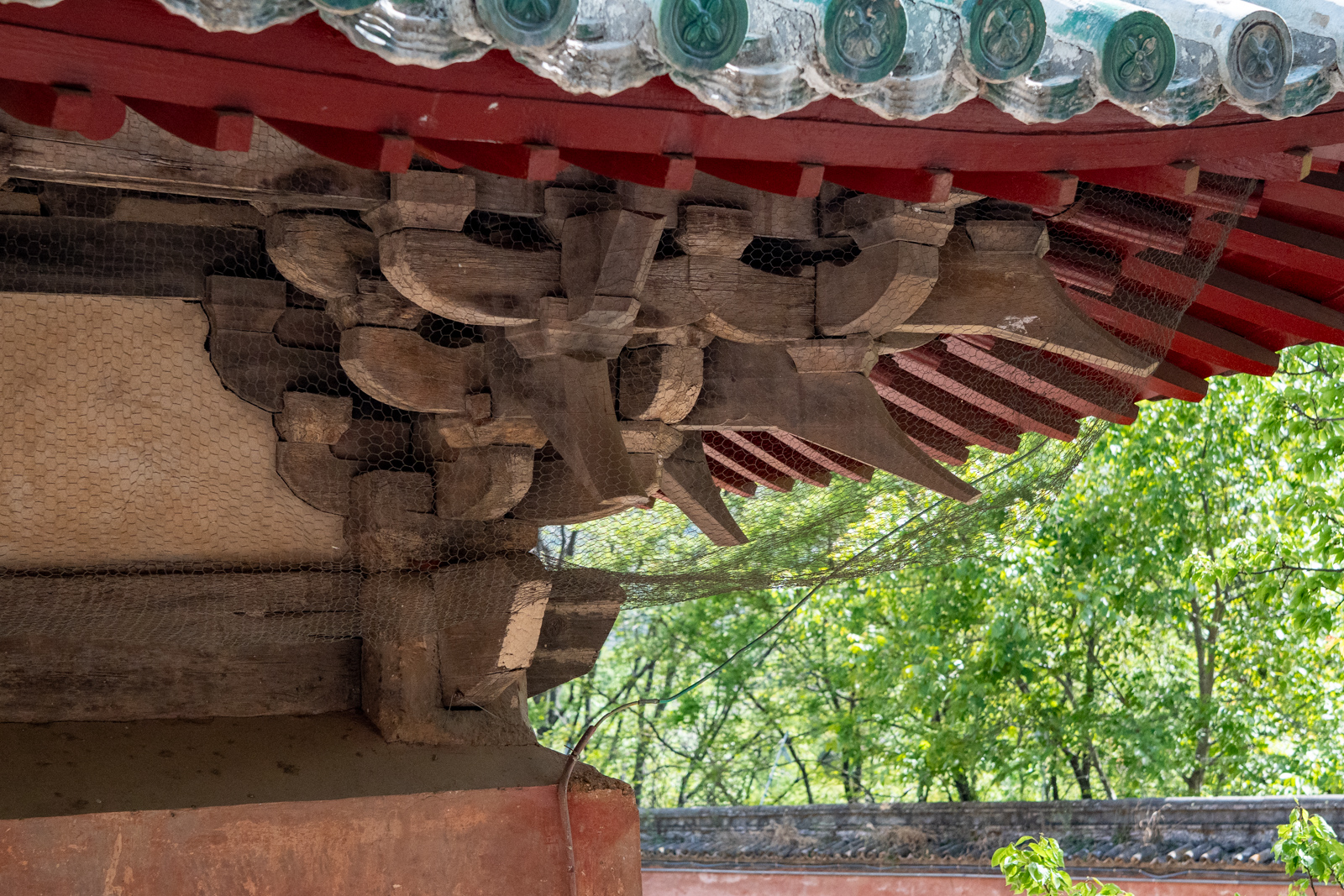
This is not unique to Chuzu Hall. It is a broader truth of traditional Chinese architecture. The corner is never just the fold of a façade. It is where columns, bracket sets, eave projection, corner beams, roof curvature, and roof-end articulation all converge into a compressed zone. Complexity intensifies here, and that is precisely why corners are so revealing.
A mature building system does not prove itself where constraints are minimal. It proves itself where constraints are most dense—and where legibility survives compression.
At Chuzu Hall, the corner is especially useful because the building is small enough to read closely, yet sophisticated enough to show how many different operations are forced to cooperate within a very limited spatial field.
3. Bracket Sets as Transition, Not Ornament
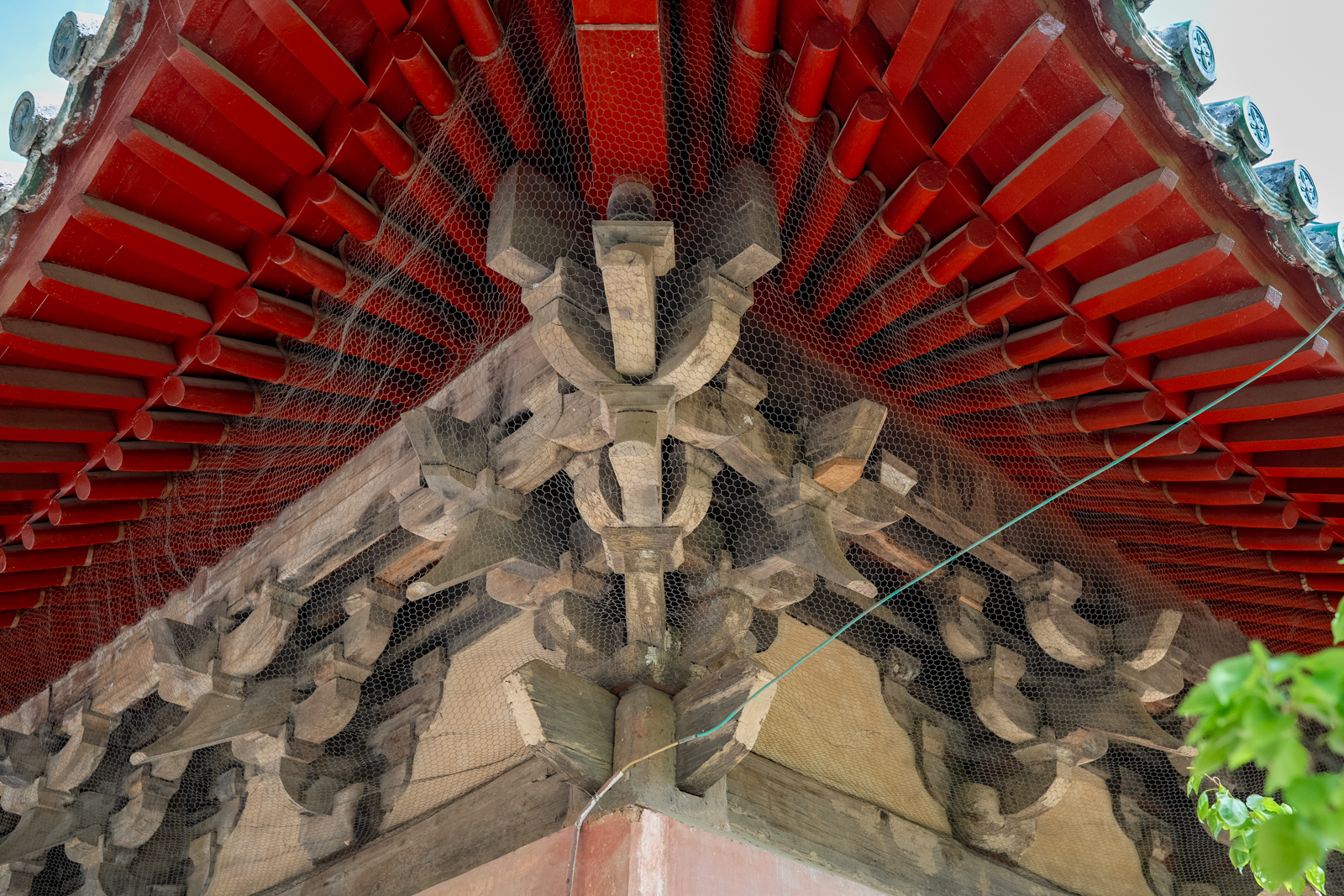
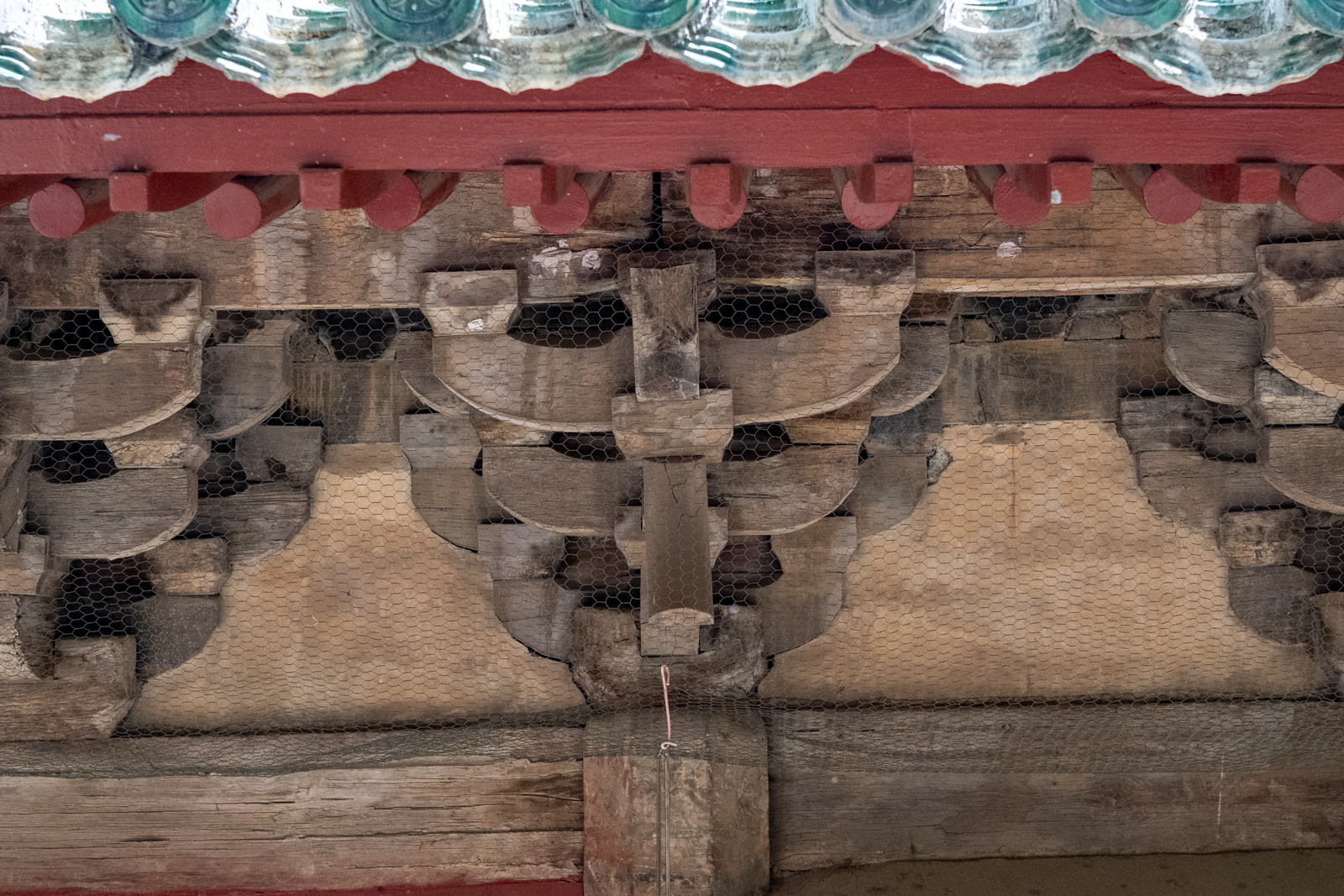
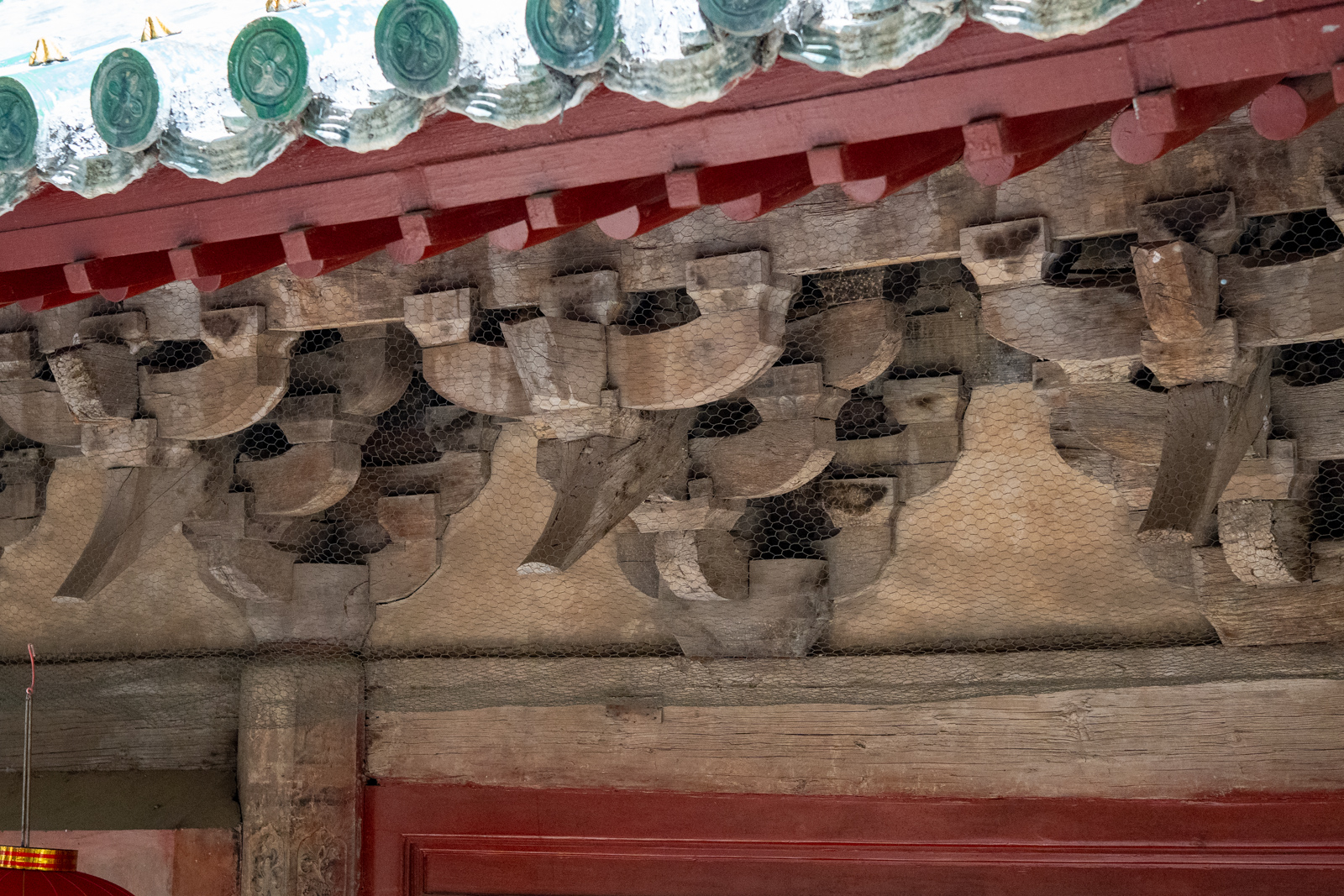
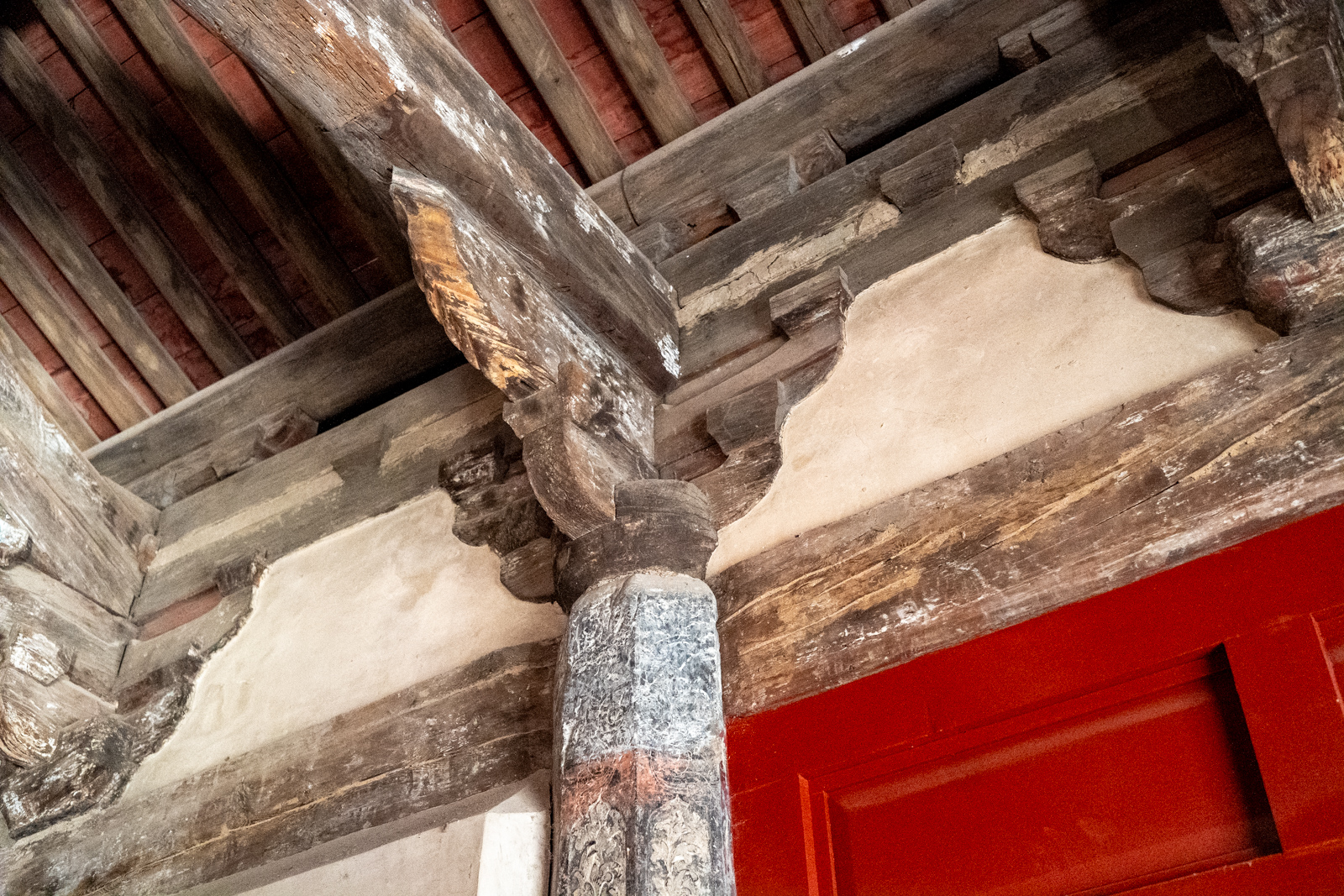
The bracket sets here should not be read as decorative surplus. They are transition devices. They mediate between vertical support and outward projection, between load transfer and visual spread, between the logic of the column and the extended presence of the roof.
Seen from the front, side, and oblique angle, the bracket sets are best understood not as isolated motifs but as part of a sequence of structural negotiation. Their value lies in how they stage transfer while keeping that transfer legible.
That is one reason Chuzu Hall remains such a strong teaching object: the bracket sets do not disappear into abstraction. They remain materially explicit.
4. Standardisation Without Sameness
Chuzu Hall is often approached through the Yingzao Fashi, and for good reason. But the lesson here is not that the building “matches the manual” in any simplistic way. The more useful lesson is that a codified building culture can produce clarity without producing monotony.
Standardisation does not have to eliminate design. It stabilises a shared language of parts, dimensions, and relations, making more precise adjustment possible at the level of assembly. What matters is not mere repetition, but disciplined variation within a known system.
This is why the building is so compelling in person. One does not see a formula. One sees control.
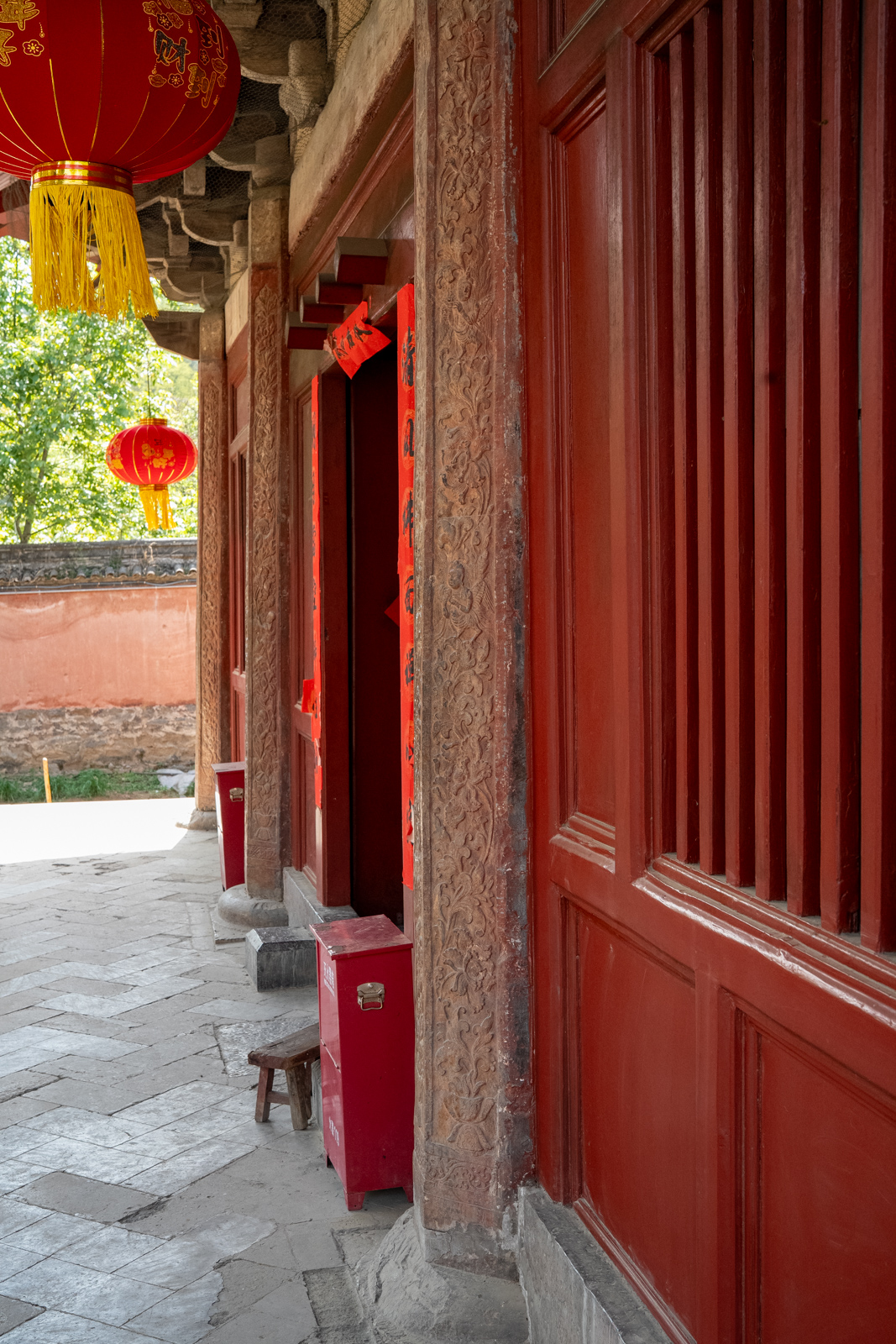
5. Material Junctions and Carved Surfaces
Chuzu Hall is not only a timber lesson. It is also a lesson in material encounter.
Stone does not simply sit below wood as a mute base. At several points, the meeting between timber and stone becomes an active boundary condition. These are not just technical junctions; they are places where the building clarifies how one material hands off to another, and how a structural system meets the ground, the wall, or the threshold.
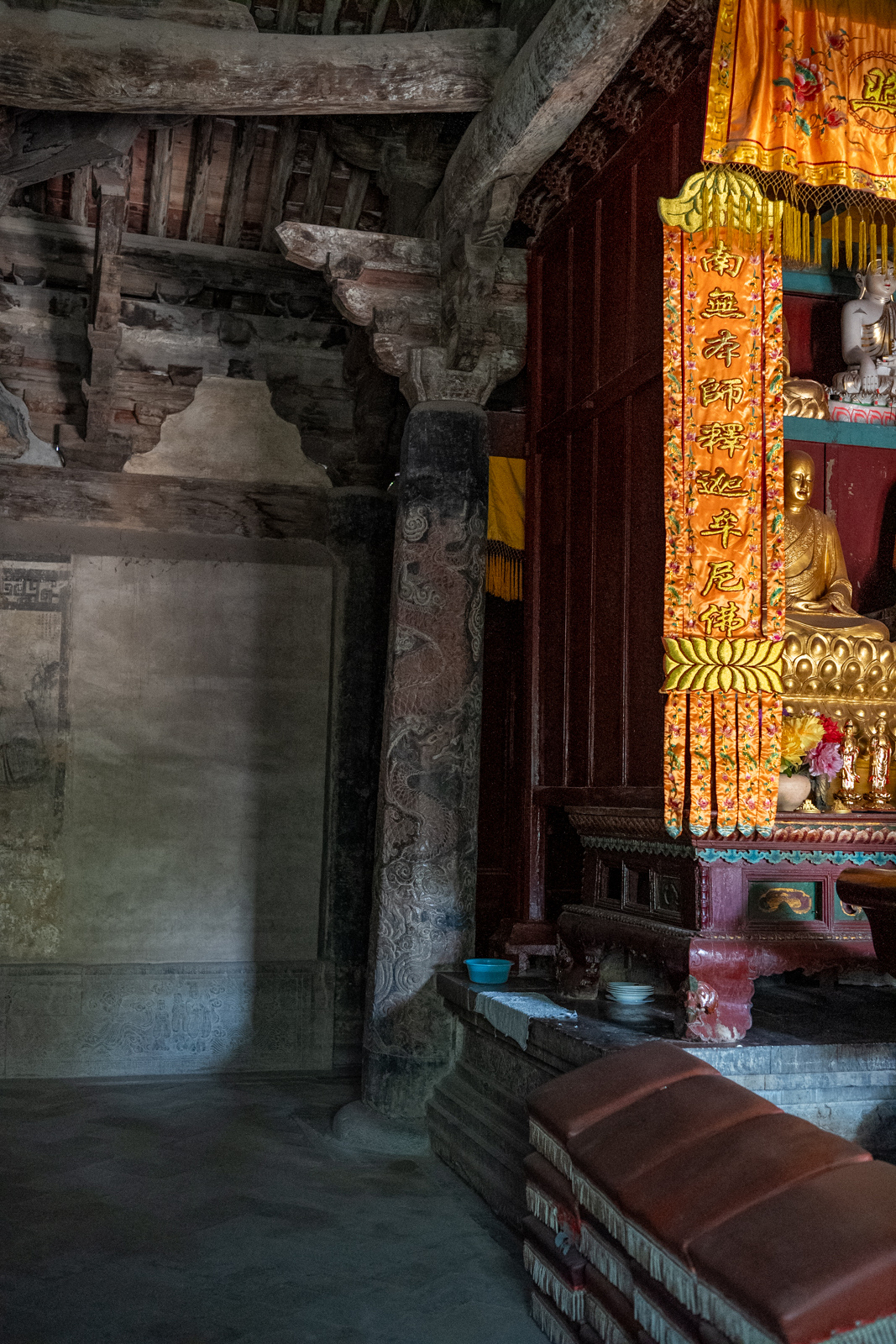
At the same time, some members become image-bearing surfaces. The carved column is not outside the system. It is part of the inhabited reality of the hall: structural, tactile, and ritualised at once.
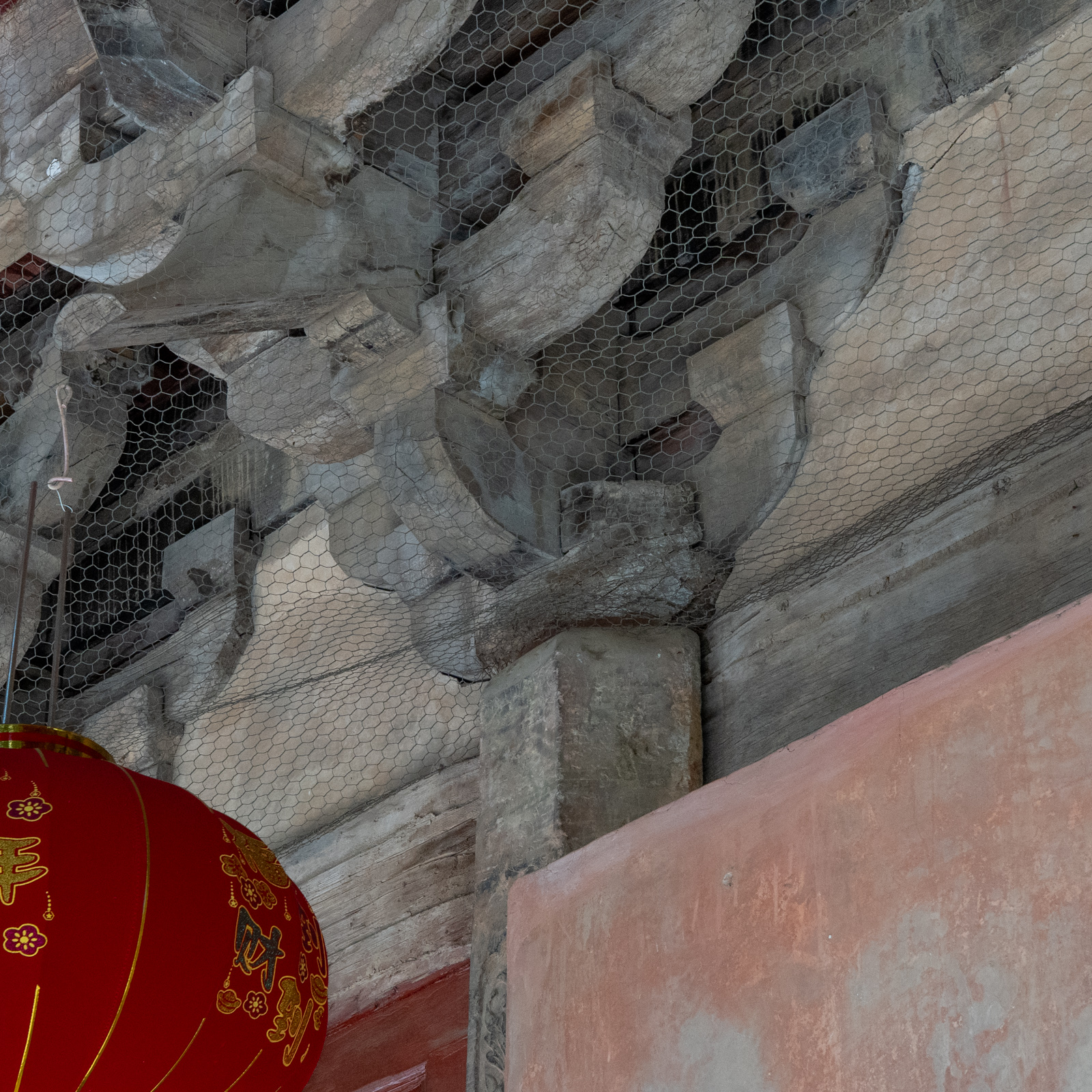
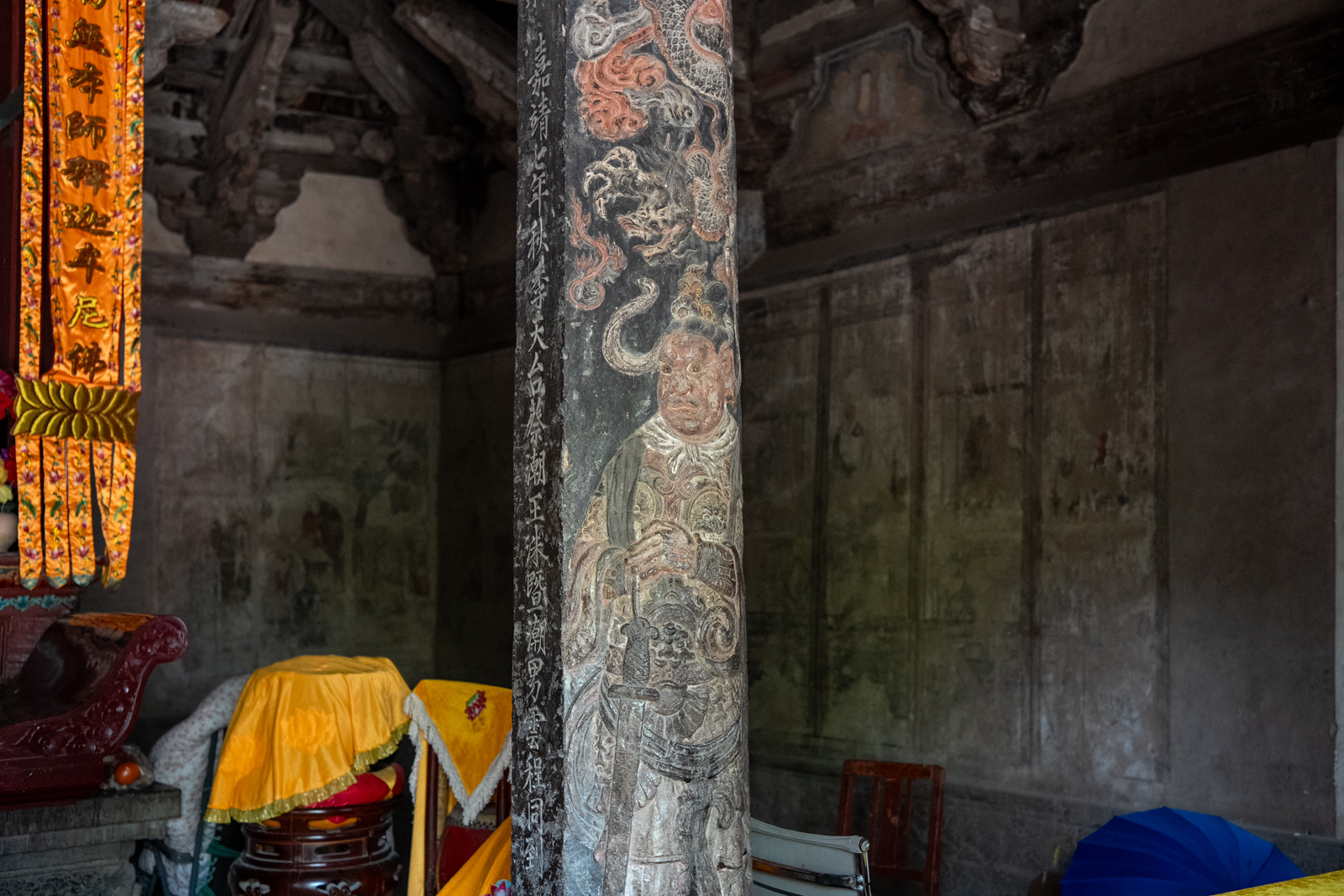
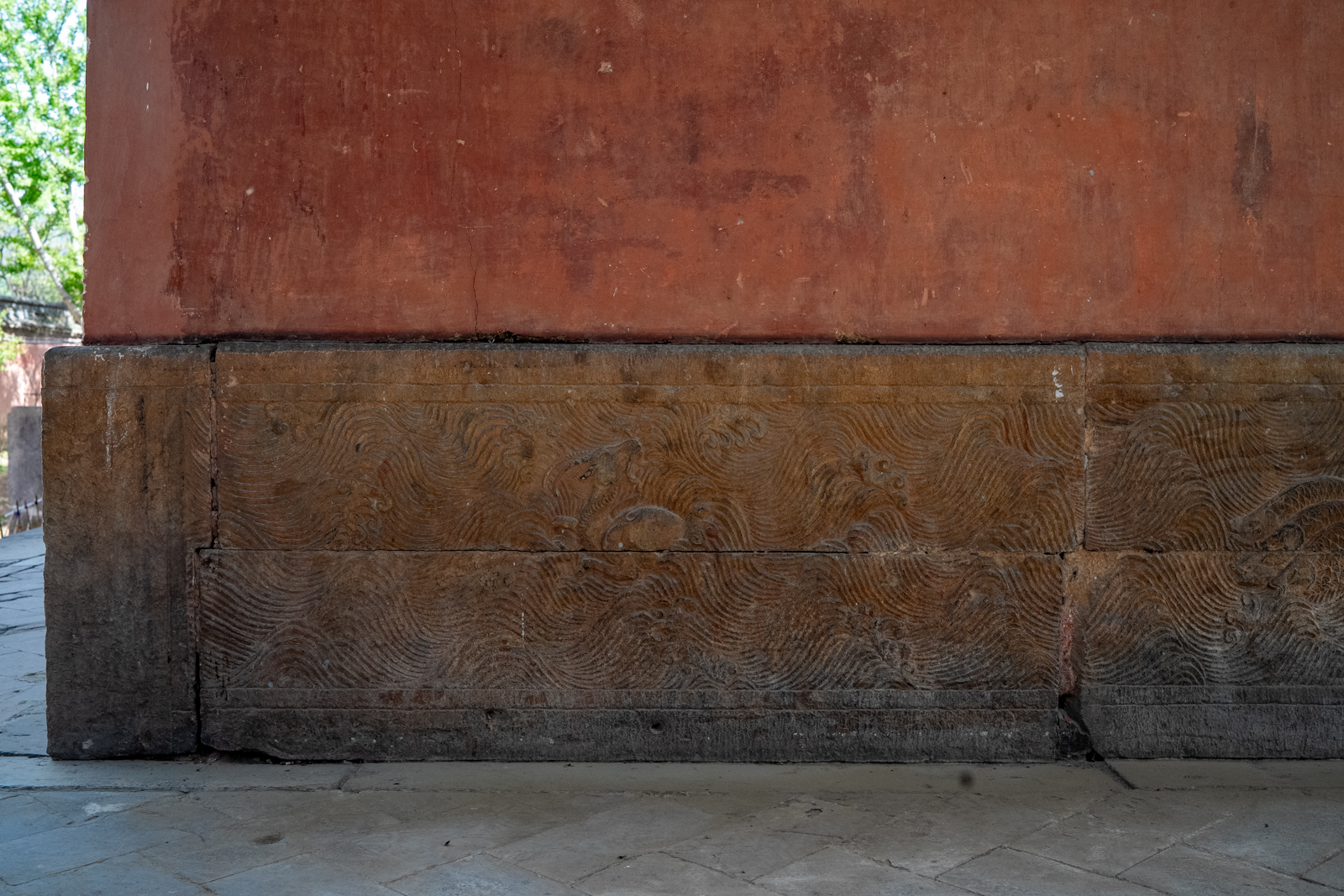
6. Structure Remains Visible
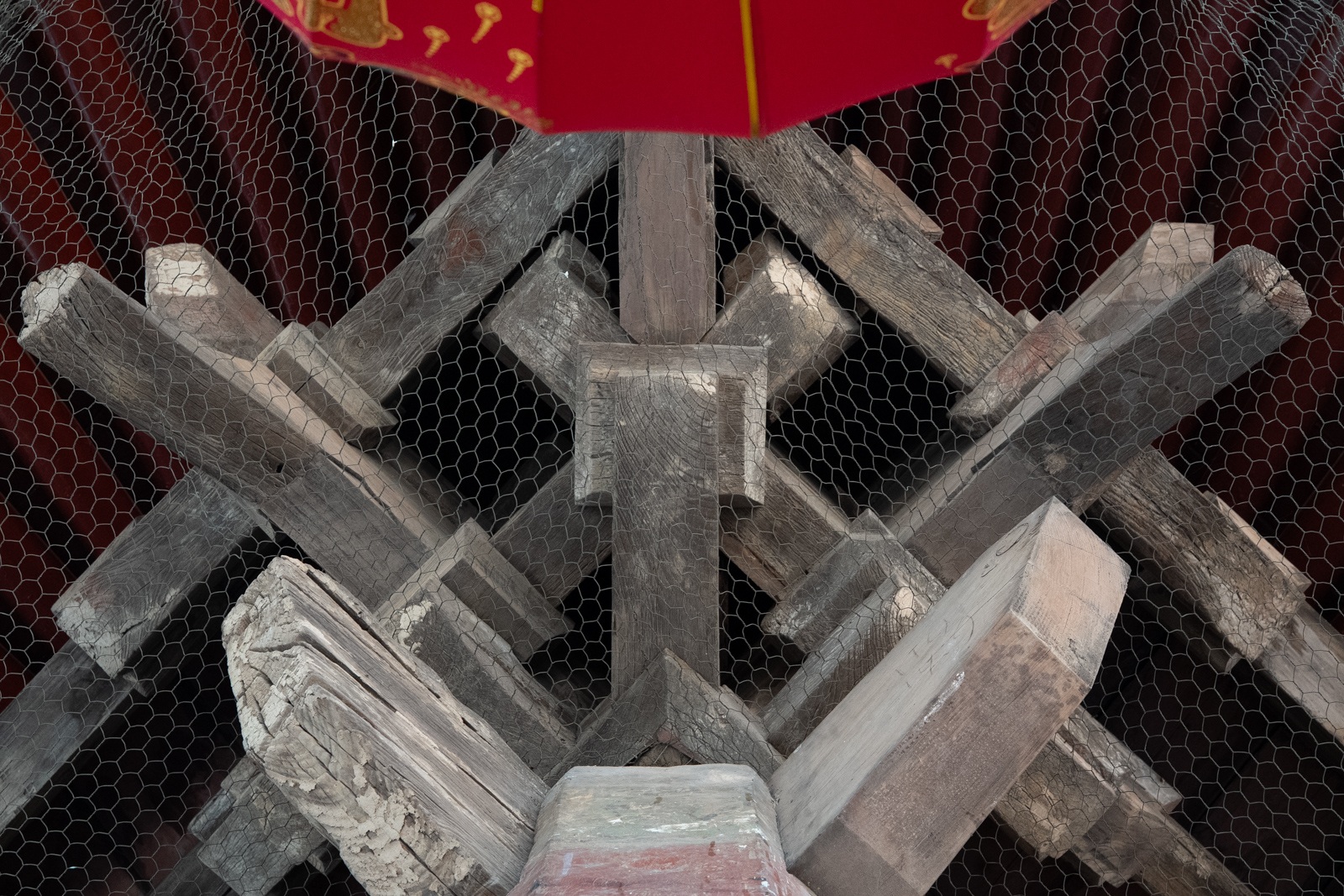
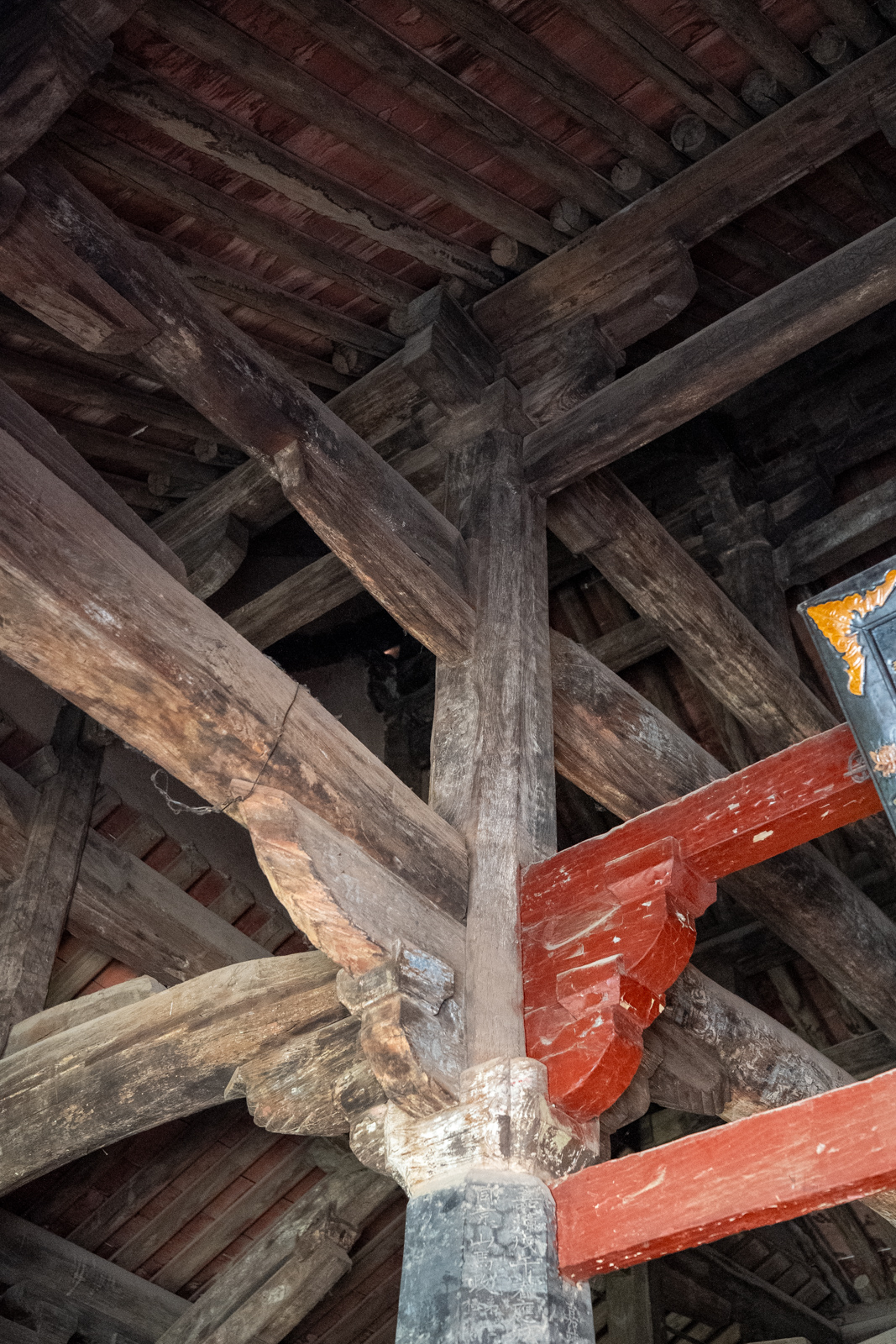
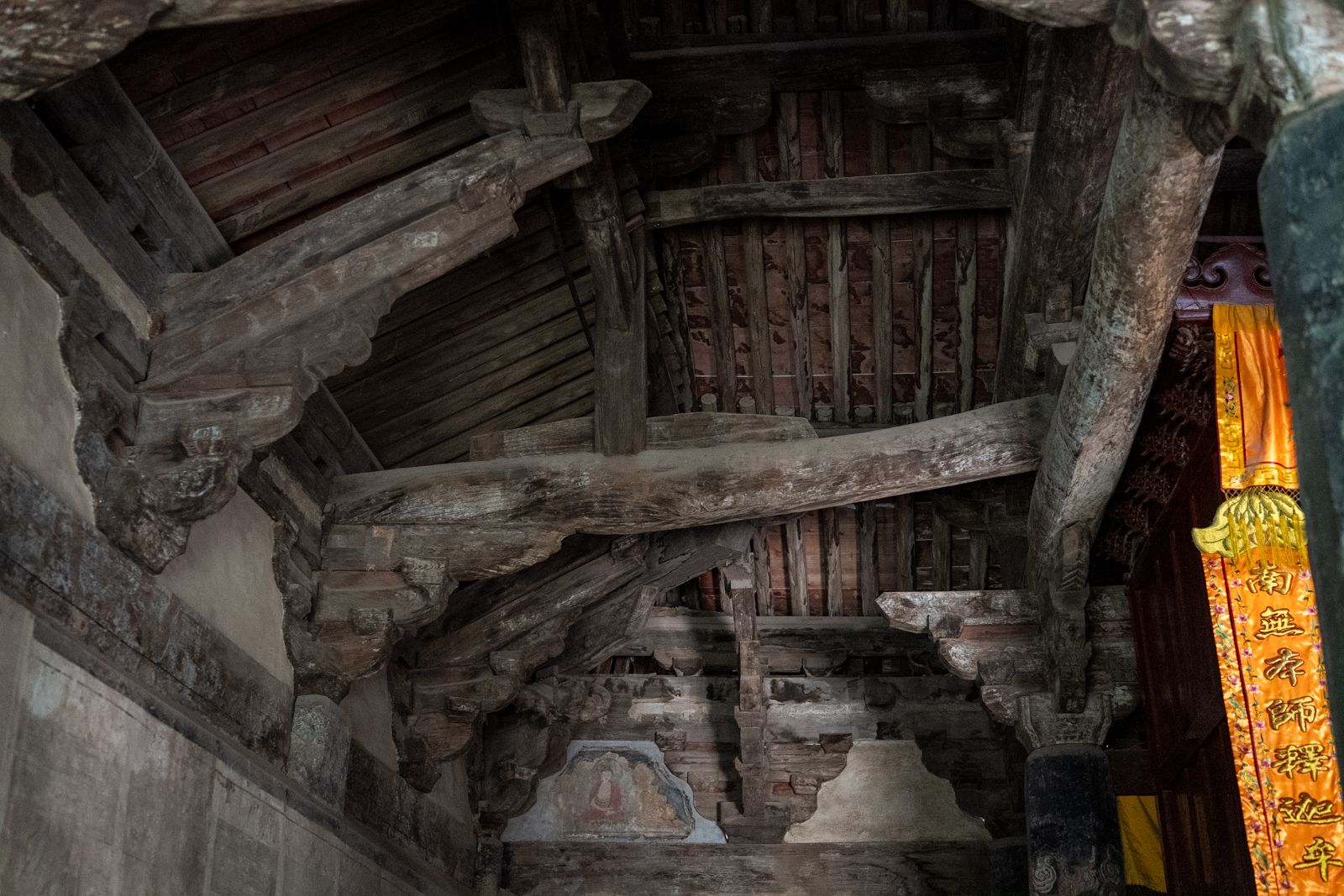
Inside, Chuzu Hall becomes even more instructive because the roof structure remains exposed. There is no ceiling to smooth over the logic of support. The building allows the frame to remain present as a readable order.
One view centres on a column where multiple members converge. Another looks upward into the layered density of the roof frame. A third clarifies that the interior is not a repetitive timber lattice: different bearing members meet the roof in different ways, each with a distinct role in support and transfer.
This matters because many historic buildings are discussed in terms of form or atmosphere while their structural intelligence is hidden. Here, the intelligence remains visible.
7. Murals Within the Ritual Interior
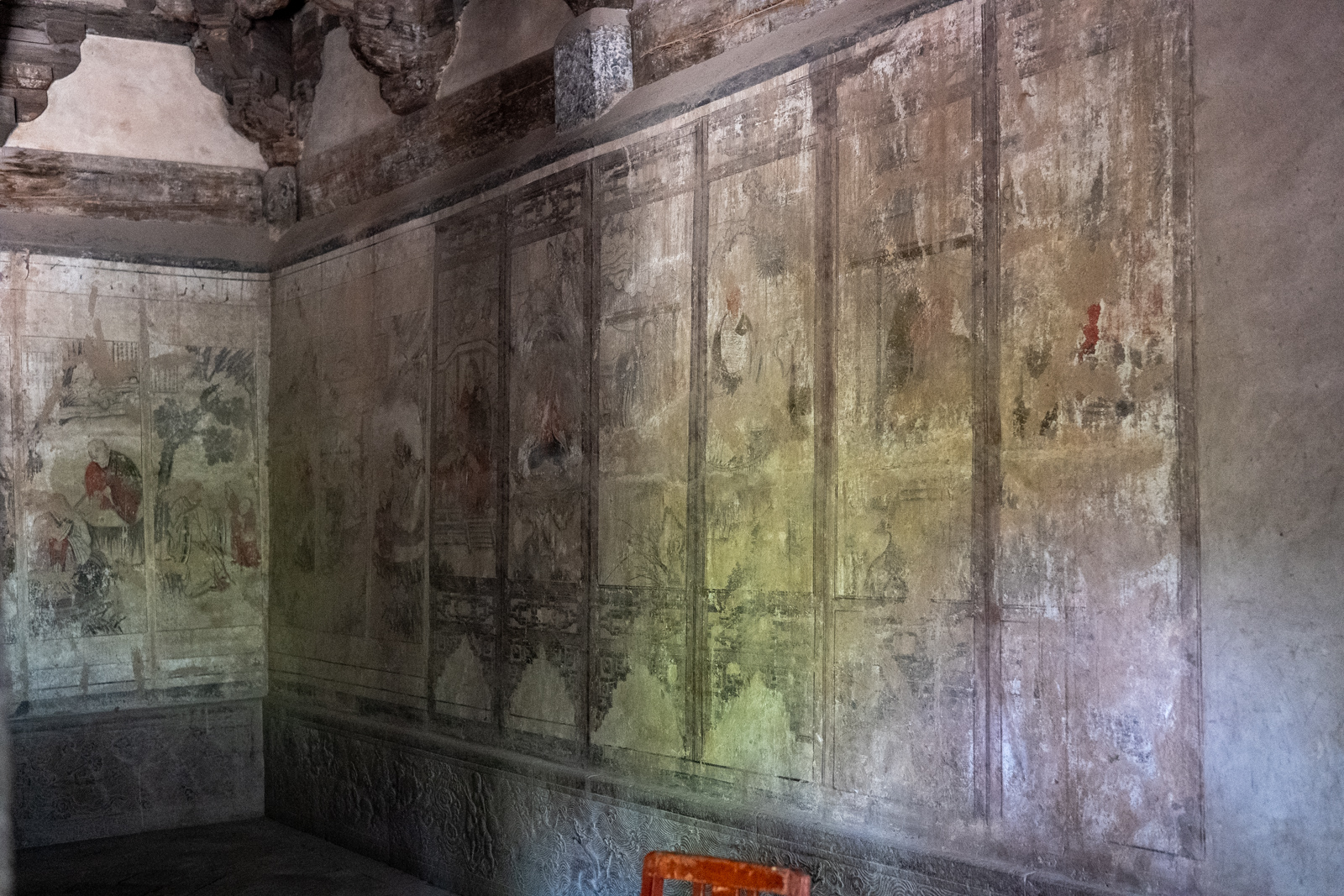
The wall paintings should not be treated as secondary decoration. They belong to the interior condition of the hall, and they remind us that this is not a timber diagram in the abstract. It is a ritual interior.
That matters methodologically. A building like this is easy to over-read as pure structure. But the hall was never only a structural demonstration. Its surfaces, images, and devotional uses shaped how the space was inhabited and perceived.
The mural therefore matters not only iconographically, but architecturally: it restores the hall to use, not just construction.
8. Ritual Reworks Structure
One of the most revealing interior facts is that the golden columns have been pushed back. This is not a minor curiosity. It is a reminder that ritual requirement can alter how structure is organised in lived space.
A historic building is never encountered as a single frozen moment. What we see is often a layered condition: original structural intelligence, later ritual adjustments, maintenance interventions, and accumulated use. Chuzu Hall should therefore be read as a historical body, not as a pure diagram of one date.
That does not weaken its value. It makes the building more truthful.
9. Roofline and Afterlife
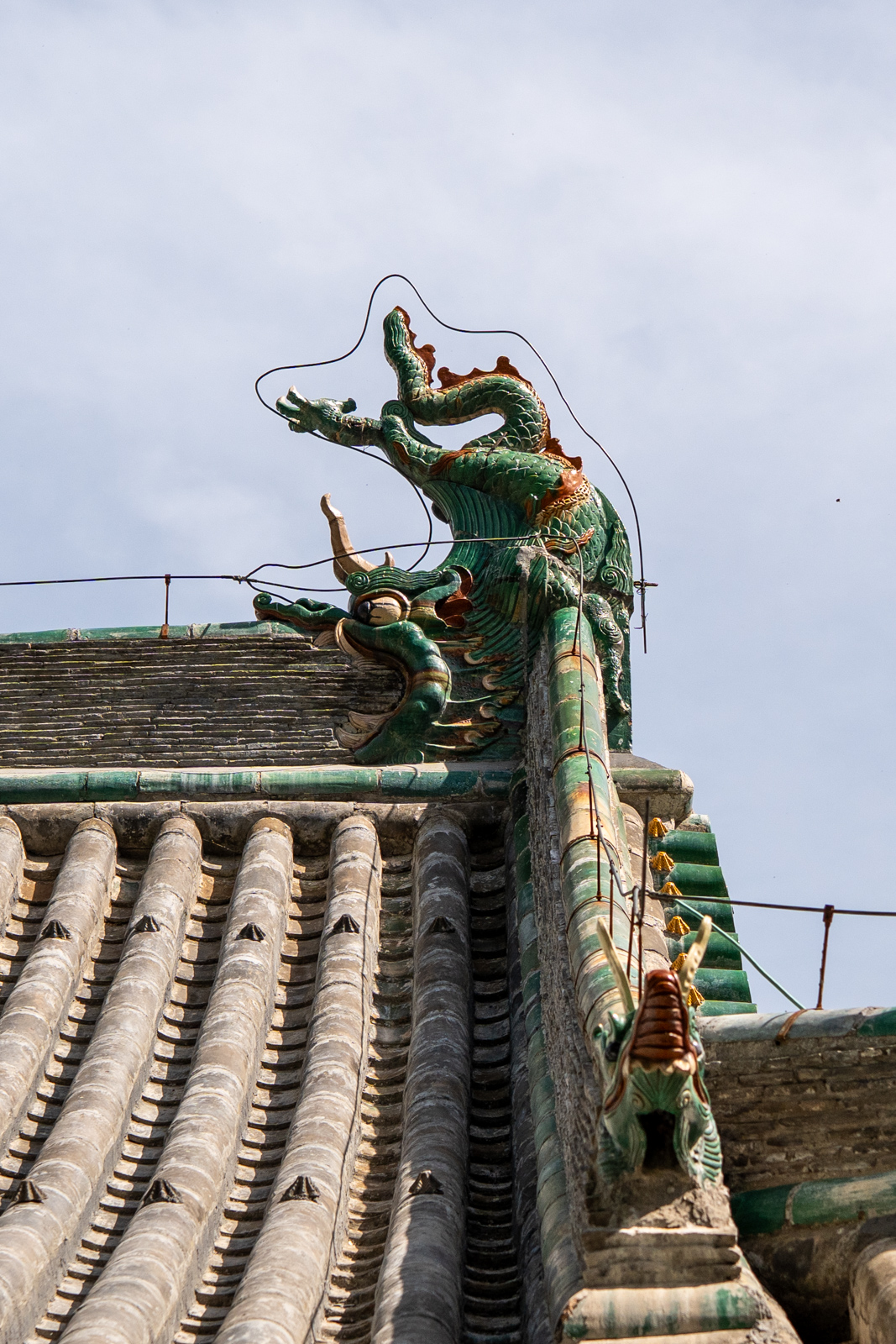
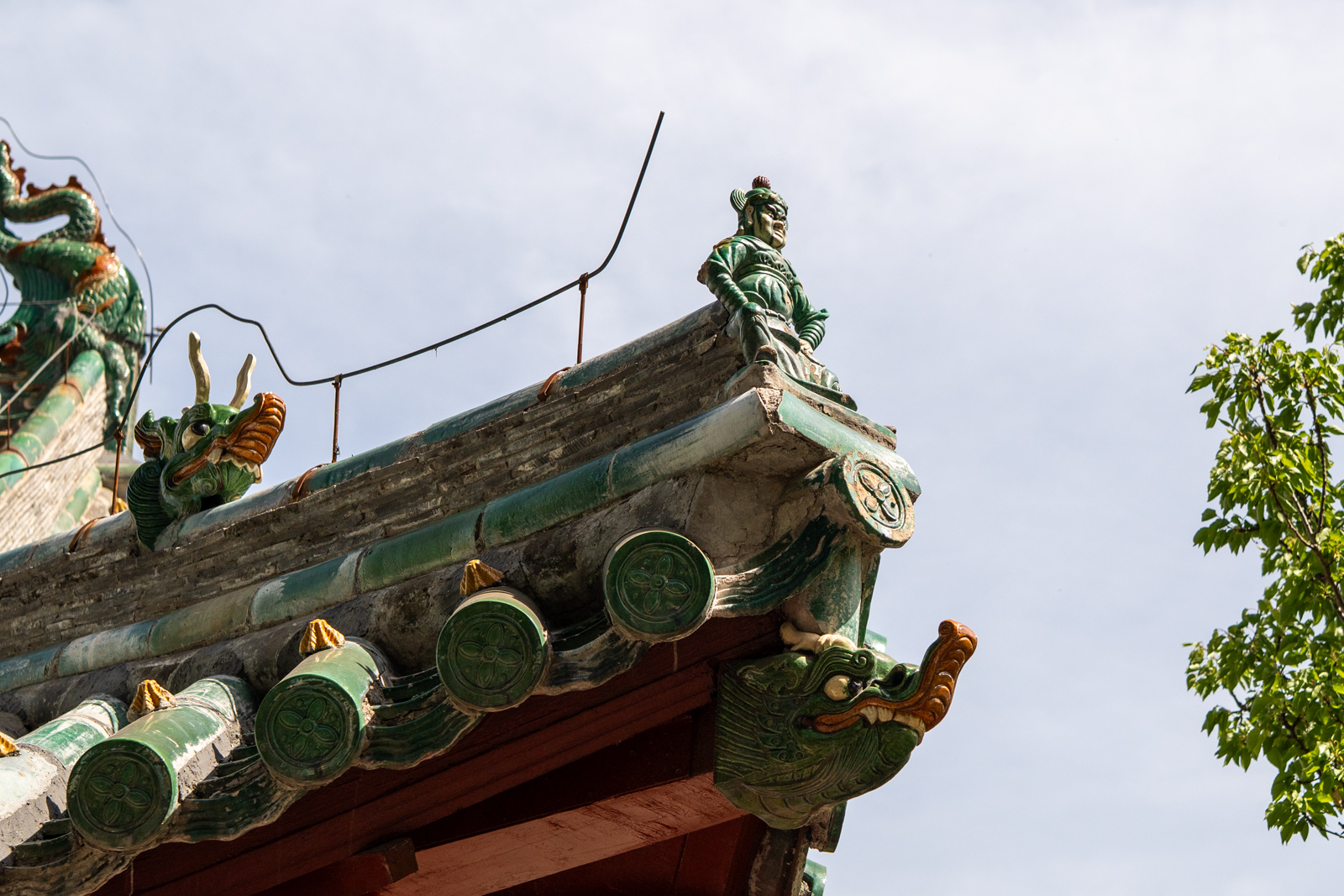
The roof should be read as both structure and afterlife.
At the level of outline, ornament, ridge, and roof-end treatment, the building records not only tectonic intention but also time: weathering, repair, continued care, and the visible persistence of a building still held in cultural use. Roof details are therefore not merely “finishing touches.” They are the exposed edge where structure, symbol, maintenance, and historical duration all meet.
This is especially true in a building like Chuzu Hall, where so much of the order remains legible below. The roof completes that legibility while also complicating it.
Closing Note
This first encounter with Chuzu Hall did not feel like the confirmation of something already known. It felt like the sudden enlargement of a question.
What makes the hall so powerful is not simply that it is old, or rare, or associated with the Yingzao Fashi. It is that the building remains readable. It allows one to see how a timber order is adjusted rather than abstract, disciplined rather than rigid, and codified without becoming dead.
That is why this hall deserves to be returned to, slowly and repeatedly.
This visual study is only a first record. Each of its threads could become a separate essay: how the Yingzao Fashi lands in built form; how standardisation can support design rather than suppress it; how corners reveal system intelligence; how ritual use modifies structural reading; how a historic building remains a layered object rather than a fixed original.
For now, it is enough to say this: Chuzu Hall makes a building order visible—and once seen, it becomes difficult to think about Chinese timber architecture in quite the same way again.